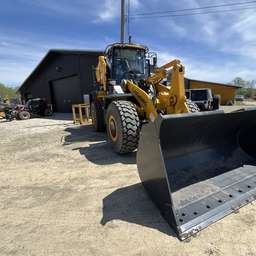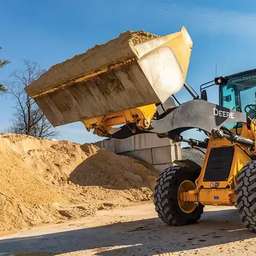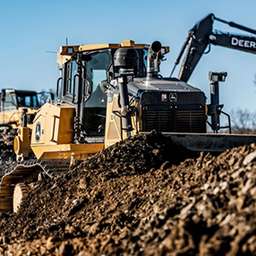
Skid steers, compact track loaders, and mini excavators dominate most conversations about compact construction equipment these days, and for good reason, they're versatile, efficient, and easy to transport. But the backhoe loader, the machine that came before all of them were as common as they are now, hasn't gone anywhere. For a specific range of jobs, it's still one of the most practical machines a contractor, municipality, or landowner can own.
This guide covers what a backhoe loader actually is, where it fits compared to excavators and skid steers, and how to think through whether one belongs in your fleet.
What a Backhoe Loader Actually Is
A backhoe loader combines two distinct working ends on a single wheeled chassis: a front-mounted loader bucket for pushing, scooping, and material handling, and a rear-mounted excavator arm, the backhoe, for digging, trenching, and precision excavation work. This dual-function design is what sets it apart from nearly every other machine on a job site. Instead of bringing in separate equipment for loading and digging tasks, a backhoe loader handles both from one machine, one operator seat, and one transport trip.
The rear digging arm operates similarly to a smaller excavator, with a bucket that curls and reaches to dig trenches, footings, or holes, while the front loader handles grading, backfilling, and general material movement. Switching between the two ends typically just means the operator swiveling their seat, making it genuinely efficient for jobs that call for both digging and loading in the same work session.
What Backhoes Are Genuinely Good At
Versatility is the backhoe loader's defining strength. For contractors and municipalities that need one machine to handle a wide range of tasks, digging a utility trench, backfilling it, then loading material into a truck, without switching equipment, a backhoe covers that entire sequence without a second machine on site. This makes it a particularly strong fit for smaller contractors and municipal public works departments that need broad capability without maintaining a large, specialized equipment fleet.
Backhoes also transport well on public roads compared to tracked equipment, since they run on rubber tires and can often be driven between nearby job sites without a trailer, a real practical advantage for utility crews and municipalities moving between scattered work locations throughout the day.
Backhoe vs. Excavator: When a Dedicated Excavator Makes More Sense
A dedicated excavator generally outperforms a backhoe's rear digging arm on pure excavation work, offering better reach, digging depth, and precision, along with the ability to rotate the house a full 360 degrees rather than being limited to the backhoe arm's fixed swing range. Our guides on excavators: everything you need to know and all you need to know about excavators cover what makes dedicated excavators the stronger choice for projects centered primarily on digging, trenching at depth, or precision excavation work where the backhoe's more limited reach and swing become real constraints.
If your work is heavily weighted toward digging with only occasional loading needs, a dedicated excavator paired with a smaller loader, or rental loader access when needed, often outperforms a backhoe's jack-of-all-trades design. The backhoe earns its keep specifically when a job genuinely needs both functions regularly, not when one function clearly dominates the work.
Backhoe vs. Skid Steer and Track Loader: Different Niches Entirely
Skid steers and compact track loaders excel at maneuverability in tight spaces, attachment versatility, and general material handling, but they don't dig the way a backhoe's rear arm does without adding a separate excavator attachment, and even then, performance doesn't match a true backhoe or excavator digging arm. Our comparison of compact wheel loaders vs. skid steers covers how these smaller machines stack up against each other, and a backhoe loader sits in a different category entirely: larger, less maneuverable in tight quarters, but capable of genuine digging depth and reach that compact equipment simply can't match without significant attachment workarounds.
For contractors deciding between these machine types, the honest answer often comes down to job mix. A backhoe makes sense when digging and loading are both regular, significant parts of the work. Skid steers and track loaders make more sense when the work leans heavily toward material handling, grading, and attachment-driven tasks across varied, tighter job sites.
Common Backhoe Loader Sizes and How to Choose
Backhoe loaders are typically categorized by operating weight and horsepower, with smaller models suited to residential and light utility work and larger models built for heavier municipal, utility, and commercial site work. Digging depth, reach, and loader bucket capacity all scale with the machine's overall size class, and matching the right size to your actual work is just as important here as it is for any other loader decision. Our guide on what determines the right size loader for your project covers this sizing logic in more detail, and the same fundamentals, matching digging depth, reach, and lift capacity to your actual job requirements, apply directly to backhoe selection.
Where Backhoe Loaders Still Make the Most Sense
A few use cases consistently favor a backhoe loader over other equipment options. Municipal and utility work, where crews regularly dig, backfill, and load across scattered locations throughout a workday, benefits enormously from the backhoe's combined capability and road-legal mobility between sites. General landscaping and site utility contractors who need to dig footings, trenches, or foundations one day and grade or load material the next find real value in not needing two separate machines for that mixed workload. Agricultural and rural property use, where a single versatile machine needs to handle everything from digging to general material handling around a property, is another strong fit for the backhoe's do-it-all design.
Attachments That Extend a Backhoe's Capability
Like most heavy equipment, backhoe loaders support a range of attachments that expand their usefulness beyond standard digging and loading buckets. Different width digging buckets on the backhoe end handle everything from narrow utility trenches to wider excavation work, while hydraulic breakers can be mounted for light demolition or rock-breaking tasks. On the loader end, forks and specialized buckets extend material handling capability much the way they do on other loader-equipped machines.
Buying Considerations: New, Used, and What to Check
Backhoe loaders hold up well when properly maintained, and the used market offers real value for buyers who know what to look for, hydraulic system condition, hours on both the loader and backhoe functions, and wear on the digging arm's pins and bushings in particular. Our guide on whether excavators hold their value covers resale and value retention principles that apply similarly to backhoes, since both machine types depend heavily on maintenance history and hydraulic condition for long-term value. For buyers specifically considering John Deere equipment, our comparison of John Deere heavy equipment is a useful reference point for understanding how backhoe loaders fit into a broader equipment lineup decision.
Rent or Buy a Backhoe?
For contractors who only need backhoe capability occasionally, renting often makes more financial sense than ownership, avoiding the cost of maintaining a machine that sits idle between projects requiring both digging and loading work. Our guides on whether to buy or rent heavy equipment and our complete guide to renting construction equipment walk through this decision in more depth, and the same framework applies directly to backhoe loaders: frequent, regular need points toward ownership, while occasional or project-specific need often favors renting.
Why Fewer Contractors Default to Backhoes Than They Used To
There's a reason backhoes aren't the automatic first choice they once were. The rise of mini excavators and compact track loaders gave contractors more specialized, more maneuverable options for jobs that used to default to a backhoe simply because it was the versatile machine available. A mini excavator digs more precisely in tight residential lots than a backhoe's rear arm can manage, and a skid steer or track loader handles attachment-driven site work with a maneuverability a wheeled backhoe can't match in confined spaces.
This shift hasn't eliminated the backhoe's usefulness, it's just narrowed the situations where it's clearly the best tool rather than simply the most familiar one. The contractors and municipalities who still rely on backhoes tend to be the ones whose actual job mix, real digging depth and reach combined with regular loading needs across varied sites, plays directly to the backhoe's specific strengths rather than asking it to do everything reasonably well when a more specialized machine would do one part of the job better.
Final Thoughts
Backhoe loaders haven't disappeared from job sites, they've just settled into the specific niche where their dual-function design genuinely outperforms owning two separate specialized machines. For municipal crews, utility contractors, and landowners who need real digging capability paired with loading versatility in one machine, the backhoe remains a hard combination to beat. Understanding where it fits relative to excavators, skid steers, and track loaders is the key to knowing whether it belongs in your fleet, or whether your specific job mix is better served by more specialized equipment instead.