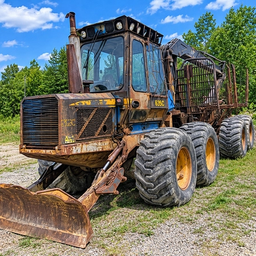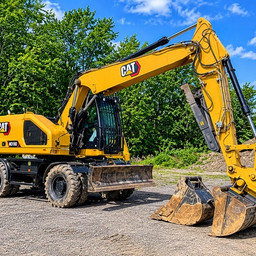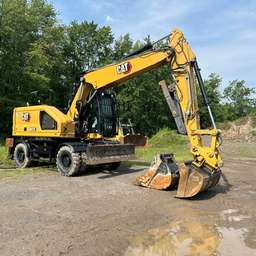
A trackhoe is a tracked excavator. The word is job site slang for a machine that rides on two steel or rubber tracks, carries a boom and digging arm, and swings a full circle on a turntable. So if you are asking what is a trackhoe, the short answer is that you are asking about an excavator. The name tells you how the machine moves, not what it does.
That confusion matters when you are pricing a job. Crews in Pennsylvania and New York use trackhoe, excavator and backhoe loosely, and the three words do not all mean the same machine. If your work leans toward loading, digging and travel in one unit, our guide to backhoe loader uses, sizing and buying covers that machine in detail.
What is a trackhoe?
A trackhoe is a hydraulic excavator that travels on tracks instead of wheels. It has four main parts: an undercarriage with tracks, a house that rotates on top, a boom and arm, and a bucket or attachment at the end.
The operator sits in the rotating house. That means the machine can dig to one side, swing 360 degrees, and dump into a truck without moving the tracks. Tracks spread the machine's weight over a wider area than tires, which can make a tracked excavator a better fit for soft ground.
Where the Name Comes From
Trackhoe is regional slang, not a manufacturer category. It combines "track" with "hoe," an old term for a digging implement pulled back toward the machine. You will hear trackhoe more often in some areas and plain excavator in others. Manufacturers and dealers usually list these machines as excavators or crawler excavators.
Is a trackhoe the same as an excavator?
Yes, for practical purposes. A trackhoe is a tracked excavator, which is the most common kind.
The one wrinkle is that not every excavator runs on tracks. Wheeled excavators do the same digging work on rubber tires, which suits paved streets and utility work where travel speed matters. So every trackhoe is an excavator, while not every excavator is a trackhoe.
Size Classes You Will Hear
Excavators run from compact units that fit through a backyard gate up to large machines built for quarry and mass excavation work. John Deere builds compact models such as the 35P and 50P along with larger construction excavators. Track material, swing design, reach and dig depth vary by model. Compare the specifications for the machine you are considering before you choose.
For a broader walkthrough of sizes and features, see our complete guide to excavators.
How is a trackhoe different from a backhoe?
A backhoe loader is a different machine, not another name for the same thing. It is a wheeled tractor with a loader bucket on the front and a digging arm on the back, and the operator turns the seat around to switch between the two.
So what is a backhoe good at? Doing two jobs with one machine. A tracked excavator trades that front loader bucket for full rotation and a design focused on digging. Compare the specific machine's reach, ground conditions and attachments before choosing.
| Feature | Trackhoe (tracked excavator) | Backhoe loader |
|---|---|---|
| Travel | Tracks. Typically hauled between sites. | Wheels. Useful for moving between nearby work areas. |
| Rotation | Full 360 degree swing. | Limited swing at the rear. |
| Front tool | None. Blade on some models. | Loader bucket for carrying and backfill. |
| Soft ground | Weight spreads across the tracks. | Tires can sink and rut. |
| Common fit | Steady digging in one location. | Short digs spread across several stops. |
Which jobs need a trackhoe?
Pick a trackhoe when the digging is the job and the machine will stay put for a while. Deep trenching, foundation digs, pond and ditch work, demolition, and site prep on soft or sloped ground all favor tracks and full rotation.
Pick a backhoe loader when you dig a little, load a little, and move often. For example, a crew making several small utility repairs in one day may prefer a backhoe loader because it combines a front bucket, a rear digging arm and wheeled mobility.
How Do You Choose Between the Two?
Work through these steps before you call for a quote.
- Write down your deepest dig and your longest reach. Those two numbers rule out machines fast.
- Count your moves. Several stops a day points to wheels. One location for days points to tracks.
- Check the ground. Wet, loose or sloped conditions favor an excavator's undercarriage.
- Measure your tightest access point, including gates, driveways and overhead lines.
- Decide who hauls it, and confirm your trailer and truck can handle the weight.
- List your attachments, such as a thumb, hammer or auger, and confirm the hydraulics support them.
Should you rent or buy one?
Rent when the need is short, seasonal or uncertain. Buy when the machine will earn steady hours across the year and you want to control its condition and availability.
A few questions usually settle it. How many hours will the machine run this year? Do you have a place to store and service it? Is the work you are bidding likely to repeat? If you are testing a size class before committing, renting first is a practical way to learn whether a compact excavator or a larger unit fits your crews. See our excavator rental options or compare new John Deere excavators when you are ready to own. We do not publish rental rates, so ask your nearest branch for a quote.
Frequently Asked Questions
It is real trade slang, but it is not an official machine category. Manufacturers and dealers list these units as excavators or crawler excavators. Crews, operators and some rental counters still say trackhoe, so you will hear both words on the same job site.
A mini or compact excavator is a small trackhoe. The design is the same: tracks, a rotating house and a digging arm. The difference is size, weight and dig depth. Compact units fit tight yards and lighter trailers, while larger units dig deeper.
For shallow trenching, utility repairs and backfill, often yes. A backhoe loader is more limited on deep digs, long reach, soft ground and tight swing areas. If your job needs continuous digging in one location, compare tracked excavators first.
Both. Compact machines often run rubber tracks, which protect pavement, lawns and finished surfaces. Larger excavators generally use steel tracks for durability in rock and abrasive material. Track material varies by model, so confirm the setup before you order.
Common options include digging and grading buckets, hydraulic thumbs, breakers, augers, compaction wheels and grapples. The machine needs the right auxiliary hydraulic circuit and coupler for each tool, so match the attachment to your specific model before you buy or rent it.
Tracked machines are built for working, not for road travel, so they are normally hauled between sites. Check your trailer rating against the machine's operating weight, attachments, fuel and any tools you carry before you transport it.
Key Takeaways
If you are asking what is a trackhoe, it is a tracked excavator built to dig and swing from one working position. A backhoe loader trades some of that digging focus for wheels and a front bucket, so it can move and multitask. Match the machine to your dig depth, your ground conditions and how often you relocate, and the choice gets simple.
Five Star Equipment states that it has served Pennsylvania and New York since 1980, with seven branches supporting customers across 57 counties. Request a quote for the machine that fits your job from Five Star Equipment.