A quarry or aggregate operation runs its equipment harder and more continuously than most construction sites ever will, and choosing machines that can genuinely handle this pace, day after day, matters directly for both production output and long-term equipment cost. Excavators, wheel loaders, and dozers built for this kind of sustained, heavy-duty use give mining and aggregate operations the reliable foundation their production schedule actually depends on.
Excavators for Mining and Quarry Excavation
Our guide on everything you need to know about excavators covers this equipment category broadly, and mining and quarry applications place particular demand on excavator durability given the abrasive material and constant digging cycles this work typically involves. Larger excavator classes generally fit quarry excavation work best, offering the digging force and bucket capacity needed to move significant material volume efficiently, while precise bucket control still matters for working around blast patterns and existing quarry face geometry without unnecessary rework.
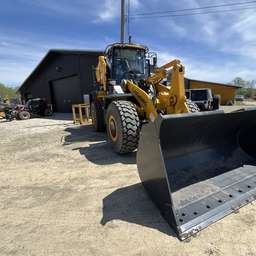
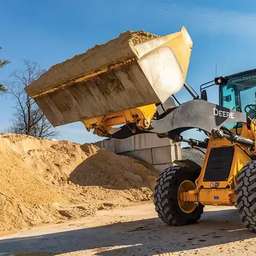
Wheel Loaders for Material Handling
Material handling at a quarry or aggregate site runs continuously, loading trucks, moving stockpiled material, and feeding processing equipment throughout an operating day. Our comparison of compact wheel loaders vs. skid steers covers a related equipment decision, and larger wheel loaders specifically suit the higher-volume, continuous loading cycles a mining or quarry operation typically demands, offering the bucket capacity and cycle speed needed to keep truck loading and material movement moving at production pace rather than becoming a bottleneck in an otherwise efficient operation.
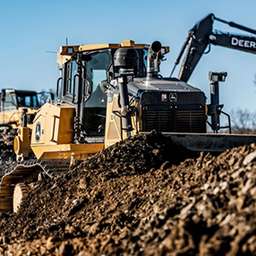
Dozers for Overburden Removal and Site Preparation
Our guide on how to choose the right bulldozer for your job covers dozer selection broadly, and mining and quarry operations rely on this equipment category heavily for overburden removal, site grading, and general material pushing across working faces and stockpile areas. Matching dozer size and blade configuration to the actual volume and material type being moved protects against equipment either underpowered for the task or unnecessarily oversized for a specific site's actual scale of work.
Sizing Equipment to Actual Production Volume
Our article on what determines the right size loader for your project covers this sizing principle, and mining and quarry applications benefit from the same disciplined approach applied at production scale. Undersized equipment struggles to keep pace with a quarry's actual material throughput, creating bottlenecks that ripple through an entire operation's daily output, while oversized equipment adds unnecessary fuel and operating cost without a corresponding production benefit. Sizing decisions here should follow directly from documented production targets rather than general assumptions about what a mining application typically requires.
Why Component Quality Matters More in This Environment
Our guide on considerations when buying quality construction equipment parts covers why part quality affects overall equipment reliability, and mining and quarry environments amplify this concern considerably given the abrasive material, constant cycling, and sustained heavy load these operations place on undercarriage, hydraulic, and cutting-edge components. Lower-quality replacement parts that might perform adequately in a lighter-duty construction application often wear out considerably faster in this more demanding environment, making component quality a genuinely higher-stakes decision for mining-adjacent equipment than it might be for a machine seeing lighter, more intermittent use.
Maintenance Demands Specific to Continuous Heavy Use
Our article on the importance of construction equipment maintenance inspections covers proactive maintenance principles broadly, and mining and quarry operations need to apply these principles with considerably more frequency given how much faster equipment accumulates wear under continuous, heavy-duty operation compared to typical construction site use. Undercarriage wear, hydraulic system condition, and cutting-edge and bucket tooth wear all deserve closer, more frequent inspection intervals in this environment, since the abrasive material and sustained operating pace common to mining and aggregate work accelerate these specific wear patterns well beyond what a standard construction maintenance schedule typically assumes.
Attachment Considerations for Mining-Adjacent Work
Our guide on understanding skid steer attachments and matching equipment and uses covers attachment matching for a different equipment category, and the same underlying principle applies to excavator and loader attachments used in mining and quarry work. Heavy-duty buckets, rock-specific cutting edges, and reinforced attachment components matched to abrasive material handling protect against the kind of accelerated attachment wear that a standard-duty attachment would experience quickly in this specific application.
Buying New vs. Used for This Application
Our article on the advantages of buying used construction equipment covers this broader decision, and mining and quarry buyers evaluating used equipment should weigh remaining component life particularly carefully given how much faster this application wears major systems compared to lighter construction use. A used machine's hour meter reading tells only part of the story in this context, since hours accumulated in a mining or quarry environment generally represent more accumulated wear than the same number of hours logged on a lighter-duty construction site.
Fleet Standardization Across Multiple Pits or Sites
Operations running more than one quarry or aggregate site benefit from standardizing equipment brands and models where practical, simplifying parts inventory, operator training, and maintenance procedures across the full fleet. A standardized fleet also gives management clearer, more comparable performance and wear data across similar machines operating in different locations, making it easier to spot when one specific unit is underperforming relative to its counterparts elsewhere in the operation. This kind of standardization takes deliberate planning during equipment acquisition rather than happening naturally through ad hoc purchasing decisions made independently at each site.
Working With an Authorized Dealer for This Scale of Operation
Our article on maximizing productivity with an authorized John Deere dealer covers the value a genuine dealer relationship provides, and this relationship matters even more for mining and quarry operations given how much production depends on equipment uptime and how costly unplanned downtime becomes at this scale. A dealer who understands mining and aggregate applications specifically, not just general construction equipment needs, can offer more informed guidance on sizing, component specification, and maintenance scheduling matched to this particular operating environment.
Fleet Planning for Continuous Production Demands
Mining and quarry operations generally can't afford the kind of equipment downtime a typical construction project might absorb without major disruption, since a stalled loader or excavator directly halts production rather than simply slowing one phase of a broader project. This reality makes fleet redundancy and proactive maintenance planning genuinely more important in this application than in standard construction work, where a brief equipment gap rarely carries the same immediate production cost. Building maintenance scheduling and, where the operation's scale justifies it, some genuine equipment redundancy into overall fleet planning protects against the outsized cost a single unplanned breakdown can impose on a continuous production operation.
Common Equipment Mistakes in Mining and Quarry Applications
A few recurring mistakes show up when operations equip a mining or quarry site without fully accounting for this application's specific demands. Applying standard construction sizing logic directly, without adjusting for the continuous, high-cycle production pace this environment actually requires, often leaves equipment undersized relative to real output needs. Specifying standard-duty attachments and cutting components to save on upfront cost, only to replace them far more frequently than a properly specified heavy-duty version would have required, often costs more over time than the initial savings were worth. Following a generic maintenance interval borrowed from lighter construction use, rather than adjusting inspection frequency to match this application's genuinely accelerated wear pattern, risks missing developing component failures until they've already progressed into costly, production-halting breakdowns.
Avoiding these mistakes starts with treating mining and quarry equipment planning as its own distinct discipline, not simply a scaled-up version of standard construction equipment selection applied without adjustment.
Questions Worth Asking Before Equipping a Mining or Quarry Operation
A few direct questions help confirm equipment selection genuinely matches this application's real demands. Does your planned excavator, loader, and dozer sizing actually match documented production volume targets, rather than general assumptions about typical mining equipment needs? Are you specifying components and attachments built for the abrasive, continuous-duty conditions this environment creates, rather than standard-duty parts that wear faster under this specific load? And does your maintenance schedule reflect the accelerated wear pattern this application actually produces, rather than a generic interval borrowed from lighter construction use?
Final Thoughts
Mining and quarry operations place genuinely heavier, more continuous demands on excavators, wheel loaders, and dozers than most construction applications, and equipment selection, component quality, and maintenance scheduling all need to reflect this reality rather than following standard construction assumptions. Sizing equipment to actual production volume, specifying durable components matched to abrasive material handling, and building a maintenance schedule around this application's accelerated wear pattern protects both daily production output and the equipment investment a mining or aggregate operation depends on for the long haul. Getting these decisions right from the start pays off in uptime that a standard-duty equipment approach simply cannot match.