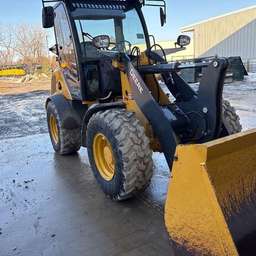
What makes a motor grader the right fit for your construction or road maintenance project? In this blog, we’ll explore the different types of graders, breaking down the main motor grader sizes available and their specific applications. Whether you’re working on a small landscaping project or a large-scale construction site, understanding the capabilities and features of different motor grader sizes is critical to achieving efficiency and success.
What are Motor Graders?
Motor graders, often simply referred to as graders, are essential equipment in the construction and road maintenance industries. Characterized by their long, adjustable blade situated between the front and rear wheels, motor graders are primarily used for creating flat surfaces. These machines are vital in the initial stages of construction projects for leveling the ground and road maintenance for smoothing and refining surfaces.
Motor graders come in various sizes, from compact graders to large highway machines, and their versatility, coupled with precision control, makes them an important tool for providing quality and efficiency in construction and maintenance work.
How Do They Work?
Motor graders operate using a central blade, which is adjustable in angle, tilt, and height. This blade, controlled by the operator, is used to level materials such as soil and gravel. The machine’s front wheels offer precision steering, while advanced hydraulic systems allow fine-tuned control of the blade. Modern graders may also include GPS and laser-guided systems for better accuracy.
Motor Grader Sizes Explained
Motor graders come in 4 main sizes: compact, small, medium, and large. Grader size is usually defined by blade length, horsepower, and operating weight, and each size has unique features and capabilities, which directly impact their performance and efficiency in different working environments.
1. Compact Motor Graders
Compact motor graders, sometimes called mini graders, are the smallest graders in the lineup, ideal for tight spaces and small-scale projects. They work well in narrow construction zones, confined work areas in cities, or narrow paths where larger graders can’t maneuver. Despite their smaller size, they deliver significant power and tight-zone maneuverability, making them perfect for minor grading tasks and landscaping.
2. Small Motor Graders
Small motor graders offer a balance between size and functionality, making them suitable for small to medium-sized projects. They’re versatile enough to perform well in tight spots but powerful enough to handle more substantial grading work. Often called a small road grader, this size is preferred for residential construction, rural roads, and light road maintenance tasks.
3. Medium Motor Graders
Medium motor graders, also known as mid-size motor graders, provide a good mix of power and precision. They are typically used in highway construction and road building, municipal road maintenance, farmland leveling, medium to large site preparations, and infrastructure projects. Their versatility and reliable performance make them a popular choice for contractors looking for an all-around mid-size grading machine.
4. Large Motor Graders
Large motor graders are built for extensive grading projects, offering high power and capacity. They do best in large-scale construction and mining operations where efficiency and speed are necessary. Their heavy-duty build allows these graders to tackle the most challenging conditions and terrains.
Maintenance and Upkeep of Different-Sized Motor Graders
Proper maintenance is key to keeping motor graders of all sizes running smoothly. Each has specific maintenance needs, whether it’s a compact, small, medium, or large grader. It’s important to regularly check and service different parts of the graders, including the engine, blade, and hydraulics. Keeping them clean, especially after use in harsh conditions, also helps prevent problems. Regular maintenance not only extends the life of the graders but also ensures they perform well in any construction or roadwork task.
Choosing the Right Motor Grader Size for Your Project
When deciding how to choose a motor grader, the right grader size depends on several factors, including the project’s scope, terrain type, and specific job requirements.
Considerations to Make:
- Project Size and Scope: Assess the scale of the project. Compact graders are better for smaller, confined spaces, while larger graders are suited for extensive construction sites.
- Terrain and Accessibility: Consider the terrain where you’ll use the grader. Rough, uneven terrains may require more powerful graders with larger blades.
- Material Handling: Evaluate the type of material the grader will be working with. Heavier materials might necessitate a grader with more power and a sturdier build.
- Maneuverability Requirements: Tight spaces, such as narrow work zones, require graders with good maneuverability, often found in small motor graders and compact models.
- Budget Constraints: Larger graders generally cost more, so consider your budget in relation to the grader’s size and capabilities.
- Future Project Needs: Think about potential future projects. A versatile grader size that can handle many tasks might be a more cost-effective long-term investment.
- Transportation and Storage: Larger graders have a greater overall grader length and blade width, so they require more space for storage and special transportation considerations, which can impact overall project logistics and costs.
Motor Graders for Sale in Pennsylvania & New York
Discover the ideal motor grader for your next project at Five Star Equipment, your trusted source for construction machinery in Pennsylvania and New York. We offer motor graders in a range of sizes, whether you need a machine for a minor residential job or a major construction project. Contact us today and experience the difference quality equipment makes.
Summary
Understanding motor grader sizes plays a significant role in choosing the right equipment for your specific project requirements. Whether you’re working on large-scale construction, road maintenance, or precise grading tasks, there’s a motor grader size that fits the job.