
Loading...
7 Locations Serving 57 Counties in PA & NY
New equipment
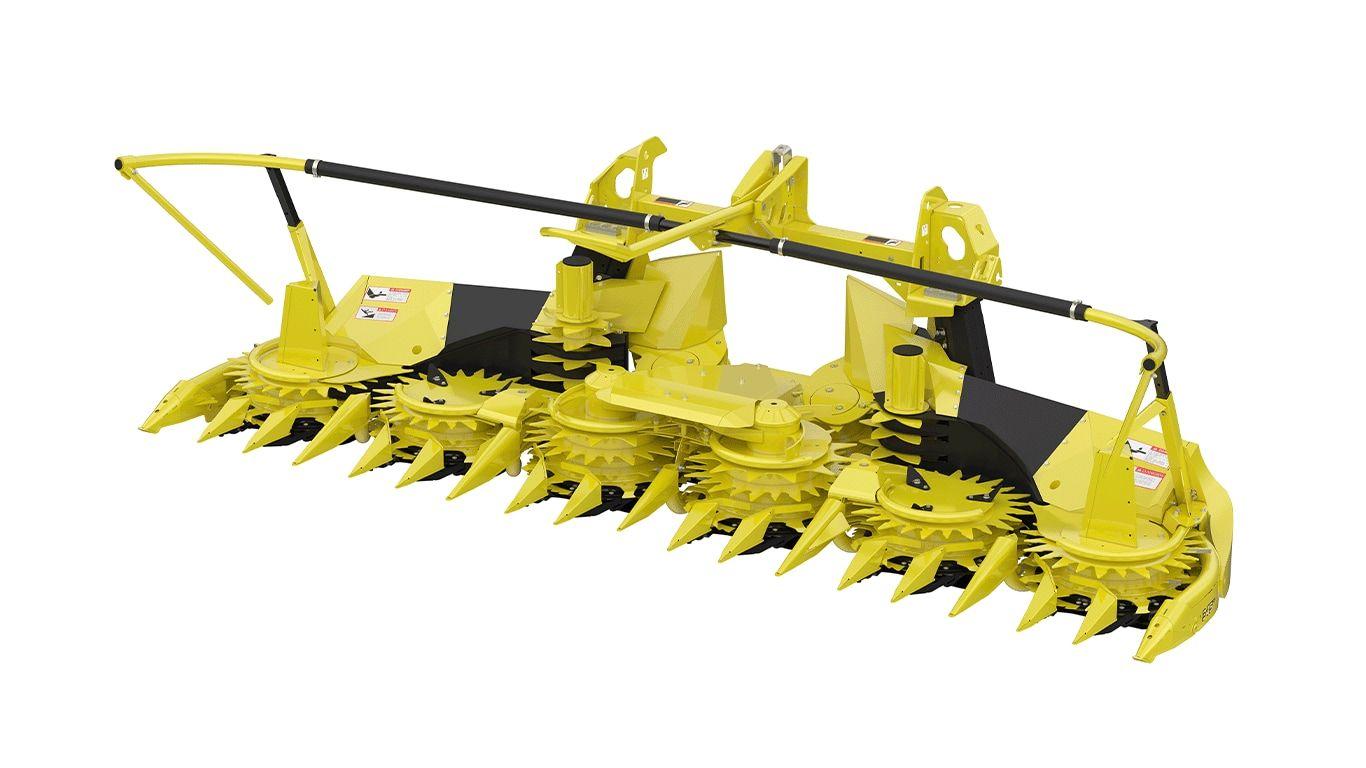
Rotary Harvesting HeadsRotary Harvesting Unit
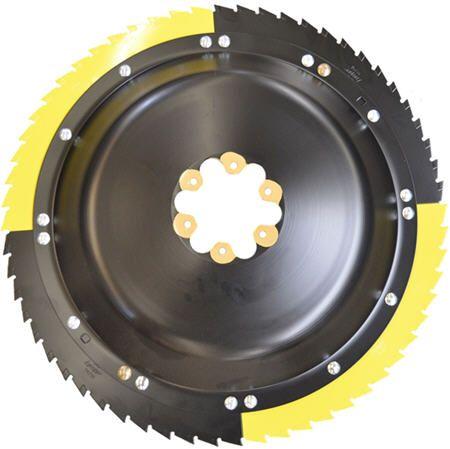
The saw blades of John Deere rotary crop headers cut quickly and thoroughly at a high speed of rotation. As the fast-turning blades cut the full width, crops can be harvested regardless of the row spacing. Thanks to this row-independent harvesting technology, the field can be worked from any side, which is particularly important for down crop.
The fast-turning saw blades allow crops with a lot of weeds to be harvested easily. Besides maize, a wide range of crops such as sorghum, whole crop silage, oilseed, canola, pampas grass, and miscanthus can be harvested.
Key features:
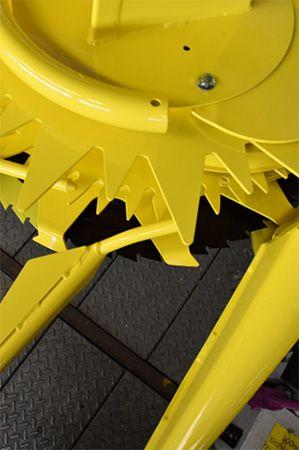
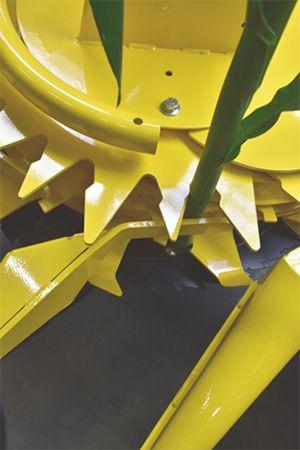
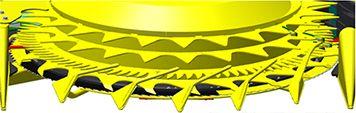

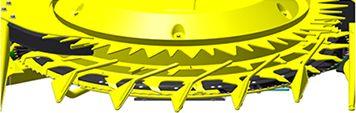
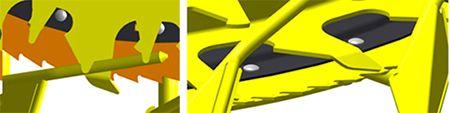
After the fast-rotating blades cut the crop, the intake fingers push the plants into the gatherer drums that rotate in the same direction at low speeds. Every plant is pushed into the teeth of the gathering drum. The specially designed shape of the teeth ensures that both small and large plants are conveyed in a secure way.
The new and improved intake finger design allows for the crop conveyance to start deeper into the drum to ensure plants are more securely held prior to cutting, which in turns allows for a clean cut before being guided into the machine while maintaining control of the stalk. Improving the intake area on the 400pro series headers allows for less cob and crop losses during difficult harvesting conditions. The new intake drums with the new tooth design allows for better performance in down crops.
In the machine, the plants are taken off the back of the gatherer drum by scrapers. Depending on the width of the header, they are forwarded to the cross-feed drums or immediately fed into the angled feed drums in the middle of the machine.
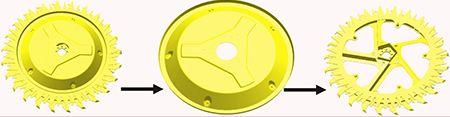
To provide an increase in uptime and productivity the 400pro headers also feature a new-style gathering drum. This particular gathering drum allows for the top cover to be removed separately and quickly provide better access to the intake fingers for increased serviceability and easier access for cleaning.

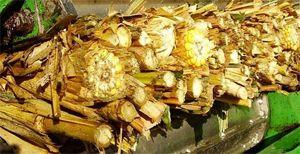
Even feeding of the harvested crop bundled lengthwise to the chopper unit of the self-propelled forage harvester (SPFH) is crucial for an even cut. Only even, lengthwise feeding allows for the full use of the power installed on the SPFH.
Benefits:
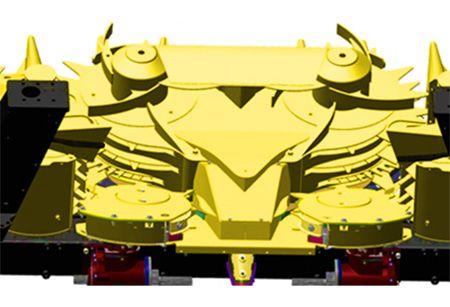
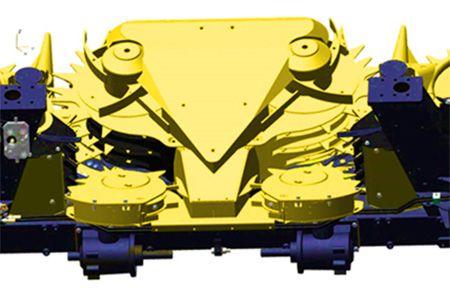
Two angled feed drums push the crop toward the feed rolls of the SPFH. The size of the feed drums depends on the size of the header; the six-row headers feature three rings that push the crop in the feed rolls of the SPFH. The eight-, 10-, and 12-row headers feature a lower version with only two rings.
In model year 2024, the middle section will feature a new and longer front cover that protects cobs from being damaged by the gathering drums. In addition, this cover can be removed to assist in harvesting down crops.
Benefits:
With the most recent generation of the small drum headers, leading performance is proven. Due to feed availability pressures, the variety of plants and harvesting conditions becomes more and more challenging. The investment into a special head is expensive. The John Deere small-drum header is a good alternative to harvest a variety of crops.
The most challenging is the optimization of the crop flow in the header. An open construction was the solution. All drum scrapers or holders of divider points are positioned out of the crop flow. An accumulation or blocking of weeds and leaves will be avoided.
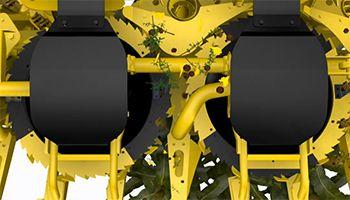
Benefits:
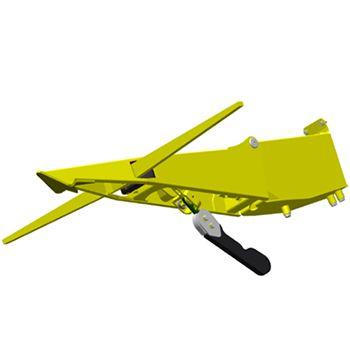
Experience improved ground following with the third AHC sensor, available as a bundle for the middle of the machine.
| Rotary harvesting unit | Length 1.5 m 5.25 ft Overall width 4.5 m 14.75 ft Height 1.4 m 4.6 ft Operating width 4.5 m 14.75 ft Transport width 3 m 9.8 ft Weight 2,025 kg 4,464 lb |
|---|
| Length | 1.6 m 5.25 ft |
|---|---|
| Overall width | 4.5 m 14.75 ft |
| Height | 1.4 m 4.6 ft |
| Transport height | - |
| Operating width | 4.5 m 14.75 ft |
| Transport width | 3.0 m 9.8 ft |
| Weight | 2,025 kg 4,464 lb |
| Engine rpm | - |
|---|---|
| Header drive shaft (shift rod pulled out for slow speed) | - |
| Gathering drum | - |
| Cutting blades for gathering drum | - |
| Feed drums | - |
| Cross feed drums | - |
| Date collected | - |
|---|