
Loading...
7 Locations Serving 57 Counties in PA & NY
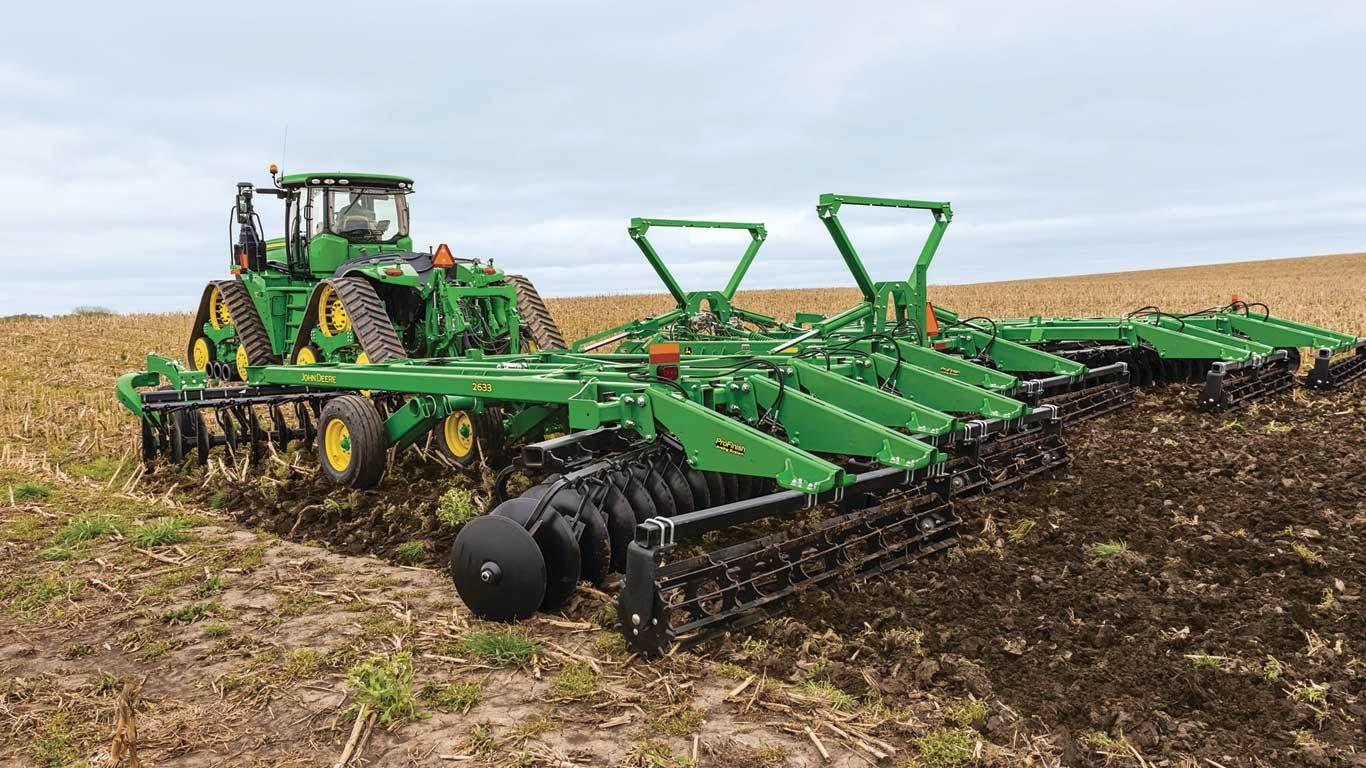
New equipment
Tillage EquipmentThree- and Five-Section Tandem Disks
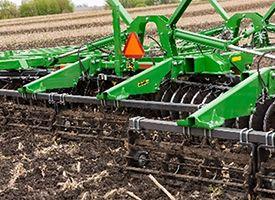
The John Deere 2630 Series offer three disk models that provide a wide range of variety for all tillage applications.
Model
2630 Disk
2633 Disk
2635 Disk
Purpose
Secondary (light duty)
Dual purpose (medium duty)
Primary (heavy duty)
Working depth
Up to 130 mm (5 in.)
Up to 180 mm (7 in.)
Up to 200 mm (8 in.)
Weight per blade
Minimum 68 kg (150 lb)
Under 13.4 m (44 ft)
Minimum 86 kg (190 lb)
Over 13.4 m (44 ft)
Minimum 91 kg (200 lb)
Minimum 127 kg (280 lb)
Blade size
560 or 610 mm
(22 or 24 in.)
610 or 660 mm
(24 or 26 in.)
610 or 660 mm
(24 or 26 in.)
Blade spacing
185 or 230 mm
(7.25 or 9 in.)
230 mm (9 in.)
230 mm (9 in.)
front and 280 mm
(11 in.) rear,
or 280 mm (11 in.)
Horsepower
23 to 36 hp/m (7 to 11 hp/ft)
23 to 36 hp/m (7 to 11 hp/ft)
26 to 36 hp/m (8 to 11 hp/ft)
Working widths
6.3 m to 15.0 m
(20.75 ft to 49.25 ft)
6.3 m to 15.0 m
(20.75 ft to 49.25 ft)
7.2 m to 12.4 m
(23.58 to 40.66 ft)
Operating speed
6.5 to 11.3 km/h
(4 to 7 mph)
6.5 to 11.3 km/h
(4 to 7 mph)
6.5 to 11.3 km/h
(4 to 7 mph)
Recommended use
John Deere's 2630 Series Disks offer different blade options for soil penetration and residue sizing.

Blade type
Solid-spherical blades
Cutout-spherical blades
Recommended application
Recommended soil type
Light to medium soils
Heavy to medium soils
Benefits
Better control of soil than cone blades since less sensitive to over speeding
Chopping or trapping residue
Penetration
Penetrate best at a 20-degree gang angle
Penetration is excellent with a cutout blade
The 2635 General-Purpose Disk comes equipped with front and rear solid-spherical disk blades with 280-mm (11-in.) spacing. The primary blade size is 610 mm (24 in.) x 6.5 mm (0.256 in.).
Additional blade options for the 2635 are listed below.
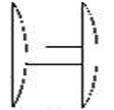
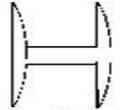
280-mm (11-in.) spacing, front and rear
230-mm (9-in.) front spacing/280-mm (11-in.) rear spacing
NOTE:
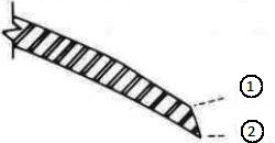
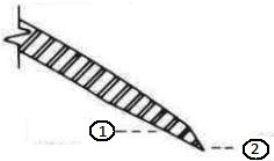
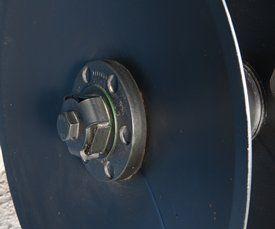
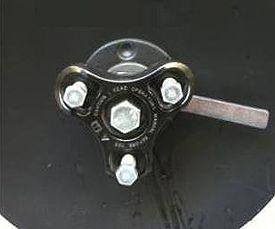
John Deere's 2630 Series Disks provide an innovative approach to tension disk gang bolts.
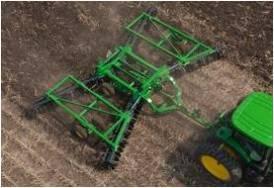
As crop yields increase, so does the amount of residue after harvest. The John Deere 2633 and 2635 Disks provide operators with a disk that can be set to prepare a seedbed for planting or set to bury and size tough residue in primary tillage applications.
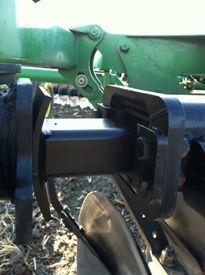
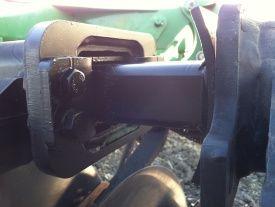
John Deere’s mechanical wing control helps producers keep their frames level for five-section disks. Mechanical wing control is included in base equipment for all five-section 2630 Series Disks.
With this feature, a large spring is placed in the wing frame on each side of the disk. As the pivot point in the wing starts to raise, the spring presses against that point to keep the disk level through tough field conditions.
The red circles in the following image illustrate the area of the disk where the large spring is placed in the wing frame.
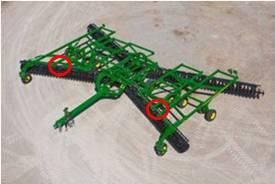

John Deere mechanical wing control is an industry-exclusive feature. A five-section disk without mechanical wing control can show up to 75-mm (3-in.) of depth inconsistency across the wing frame.
John Deere 2630 Series Disks and Vertical Tillage Implements feature extended-life bearings. These more durable and reliable bearings allow producers to customize bearing maintenance for specific growing conditions and soil types.
The flange-mounted bearing and sealing system features improved contamination resistance. The advanced seal material is highly resistant to wear and damage caused by abrasive soils and other crop materials. The design of these is more durable and reliable than previous bearings.
The design of this bearing system allows for dynamic self-alignment to the gang bolt, as opposed to trunnion-mounted bearings that have limited alignment capability. This system features additional freedom of movement, accommodating a wider variety of field conditions. The bearing system has been designed to decrease stress and fatigue on the inner rolling surfaces, supporting extended bearing life.
The bearing and seal design allows for a limited, seasonal maintenance interval to minimize downtime. They also allow producers to customize the maintenance for specific growing conditions and soil types. The multi-lipped sealing system cannot be damaged by frequent greasing. It allows bearings to accept grease within the bearing as well as provide grease to the outer bearing surface to eliminate wear between the bearing and housing. With this design, the bearings can accept grease even if misaligned to the housing.
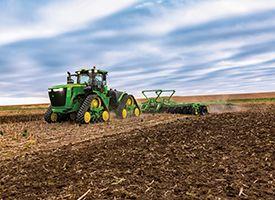
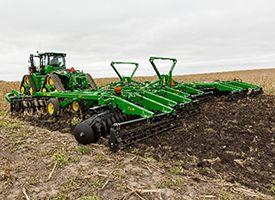
The 2630 Series Disks offer multiple upgrades and additional items as options versus the 2620 Series Disks to enhance the machine. Check out the following video to see more about the 2630 Series Disks.
John Deere 2630 Series Disks and Vertical Tillage Implements feature extended-life bearings. These more durable and reliable bearings allow producers to customize bearing maintenance for specific growing conditions and soil type.
John Deere TruSet system is featured in base equipment for the 2630 Series Disks and Vertical Tillage Implements. TruSet side-to-side is also available and features individual section leveling.
The hydraulic rolling basket is offered with a round bar or knife-edge. The knife-edge is best for heavier, wet soil, and can be used in rocky conditions.
The 2630 Series Disks and Vertical Tillage Implements feature radial tires for the mainframes in base equipment. Radial tires are available as an option on the wing frame and stabilizer wheels. These tires are designed to offer longer wear life and help minimize compaction with a wider plate and lower inflation pressures.
Producers can choose either mechanical stabilizer wheels or TruSet hydraulic stabilizer wheels as an option. Stabilizer wheels help to maintain a consistent, level depth and are recommended for operation on rolling ground. The mechanical stabilizer wheels can be manually adjusted with a turnbuckle. TruSet with side-to-side leveling capabilities also enables operators to control the TruSet hydraulic stabilizer wheels from the cab while on the go.
| Working width | 10.2 m 33.58 ft |
|---|---|
| Transport width | 4.7 m 15.5 ft |
| Transport height | 4.6 m 15 ft |
| Working depth | Up to 20.3 cm 8 in. |
| Blade spacing | Option 1: front and rear spacing both: 27.9 cm 11 in. Option 2: front spacing: 22.9 cm 9 in. and rear spacing: 27.9 cm |
| Horsepower per ft | 6.7 to 8.2 kW 9 to 11 hp |
| Operating speed | 8.05 to 11.3 km/h 5 to 7 mph |
| Working width | 10.2 m 33.58 ft |
|---|---|
| Transport width | 4.7 m 15.5 ft |
| Transport height | 4.6 m 15 ft |
| Gang standards | C-spring |
| Gang angle | 21/19 degree (angle) |
| Purpose | Primary |
| Working depth | Up to 20.3 cm 8 in. |
| Weight per blade | 127 kg 280 lb |
| Blade size | 60.96 cm 24 in. or 66.04 cm 26 in. |
| Blade spacing | Option 1: front and rear spacing both: 27.9 cm 11 in. Option 2: front spacing: 22.9 cm 9 in. and rear spacing: 27.9 cm |
| Horsepower per ft | 6.7 to 8.2 kW 9 to 11 hp |
| Operating speed | 8.05 to 11.3 km/h 5 to 7 mph |
| Blade concavity | - |
| Blade thickness | - |
| Front blades | Option 1: 38 with front and rear spacing both: 280 mm 11 in. Option 2: 42 with front spacing of: 230 mm 9 in. and rear spacing of: 230 mm |
|---|---|
| Rear blades | Option 1: 38 with front and rear spacing both: 280 mm 11 in. Option 2: 42 with front spacing of: 230 mm 9 in. and rear spacing of 280 mm |
| Total | Option 1: 76 with spacing of 280 mm 11 in. Option 2: 84 with front spacing of 230 mm 9 in. and rear spacing of 280 mm |
| Main frame front | Option 1: 6 with spacing of 280 mm 11 in. Option 2: 6 with front spacing of 230 mm 9 in. and rear spacing of 280 mm |
|---|---|
| Main frame rear | Option 1: 4 with spacing of 280 mm 11 in. Option 2: 4 with front spacing of 230 mm 9 in. and rear spacing of 280 mm |
| 1st wing front | Option 1: 6 with spacing of 280 mm 11 in. Option 2: 8 with front spacing of 230 mm 9 in. and rear spacing of 280 mm |
| 1st wing rear | Option 1: 8 with spacing of 280 mm 11 in. Option 2: 8 with front spacing of 230 mm 9 in. and rear spacing of 280 mm |
| 2nd wing front | - |
| 2nd wing rear | - |
| Total | Option 1: 24 with spacing of 280 mm 11 in. Option 2: 26 with front spacing of 230 mm 9 in. and rear spacing of 280 mm |
| Date collected | - |
|---|